
A Side Project that Changed My Life
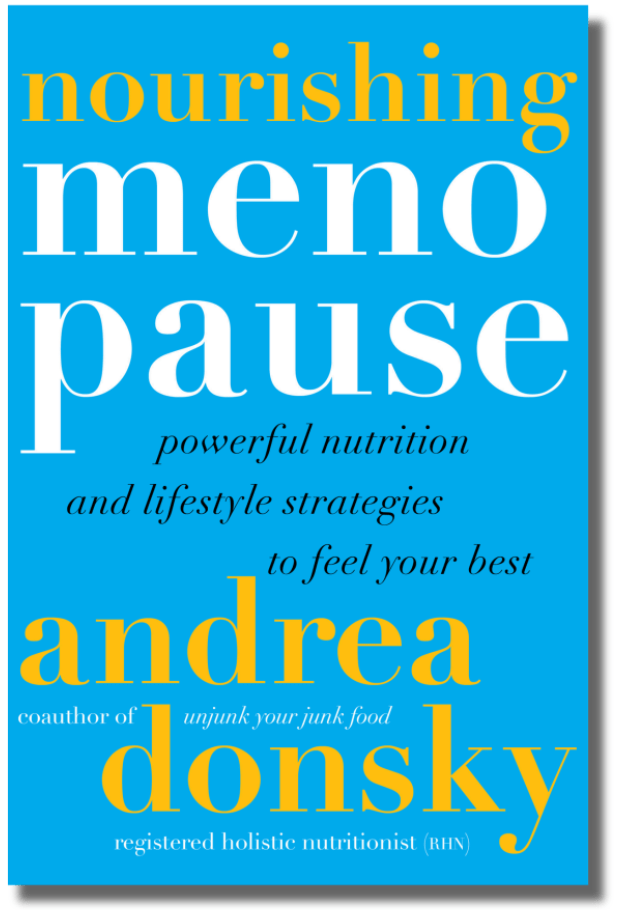
When Andrea Donsky—my incredibly smart, hard-working, long-time friend and colleague—asked me to help her write Nourishing Menopause, I assumed it would be a straightforward editing project.
At the time, I was about a year into menopause and virtually symptom-free… or so I thought. I figured I’d bring my clinical nutrition experience, help shape the content, and share some of my personal approach along the way.
I had no idea how deeply this project would change me.
Two Years, Two Menopausal Women, One Goal
What followed was two years of research and writing—two busy professionals, both navigating menopause, careers, and motherhood, trying to bring an important message into the world. At times, the process was frustrating and mentally exhausting, but far more often, it was mind-blowing, because what we uncovered was eye-opening. I immediately tweaked my food choices, eating schedule, supplements, sleep hygiene strategy, and exercise, and it worked! The results were quick, and the payoff was more than worth the effort.
I Didn’t Know What I Thought I Knew
Research on menopause exists—solid, peer-reviewed research—but much of it has been quietly published instead of widely shared. The kind of information that should be front and center in clinical conversations has, for the most part, stayed in the background.
As a nutrition professional, I’ll be honest: I was astonished by how much I didn’t know about the menopause transition. Andrea’s own research (seven of her studies have been published in medical journals) uncovered more than 100 symptoms associated with perimenopause and menopause. Looking back, I can clearly see that I experienced many of them in my 40s, but I attributed them to stress, workload, poor sleep (another symptom), overtraining, anything but perimenopause. I now see the same pattern in many of my 40-something clients: women who are experiencing real, disruptive symptoms, yet don’t (or aren’t ready to) recognize them as hormone-related.
More Than Hot Flashes: The 100+ Symptoms We’re Not Talking About
In Nourishing Menopause, we break down the 100+ symptoms—far beyond the 30–40 symptoms most people are familiar with. These include:
- cognitive changes and brain fog
- anxiety and mood shifts
- disrupted sleep
- energy fluctuations
- metabolic changes
- and many more that often go unrecognized
Countless women experience these symptoms every day—often dismissed, misattributed, or simply normalized. It’s no wonder so many women feel confused and unsupported.
What I Wish I Knew at 40
If I could go back, I would hand this information to my 40-year-old self. I would prepare her for what was to come. Preparing for perimenopause and menopause doesn’t start when your symptoms kick in. It starts in your 30s with your diet, exercise, and learning to manage stress and cortisol.
With clients, I ask different questions. I look for different patterns. And I offer more targeted, evidence-informed strategies that align with what women’s bodies actually need during this transition.
What Comes Next: Supporting Other Practitioners
Andrea and I ultimately submitted five times more content than the publisher had anticipated—leaving us with over 80,000 words of critical research that dives deeper into the why behind menopause symptoms, along with evidence-informed strategies to address them. Rather than letting that content sit on the sidelines, we’re bringing it to life.
This summer, the Health Coach Collaborative is launching the Certified Perimenopause and Menopause Health Coach (CPMHC) Program—built on the foundation of Nourishing Menopause, expanded with our additional research and practical applications.
The program is designed specifically for health coaches and wellness professionals who are on the front lines. Because the reality is: the approaches to nutrition and exercise that worked before perimenopause often no longer apply. Women need a different strategy, and practitioners need the tools to guide them.
The CPMHC program delivers clear, practical, evidence-based protocols that can be integrated into an existing practice, helping professionals better support their clients through this critical transition.
Join the wait list: If you’re interested in learning more about the CPMHC program, add your name to the wait list to be among the first to receive updates.

